The Mall Casino — Slot Machines and Betting in Mall Rivals
The mall just got louder. A full casino opened in the Comeback Update. Here is how the slot machine works and when to play.
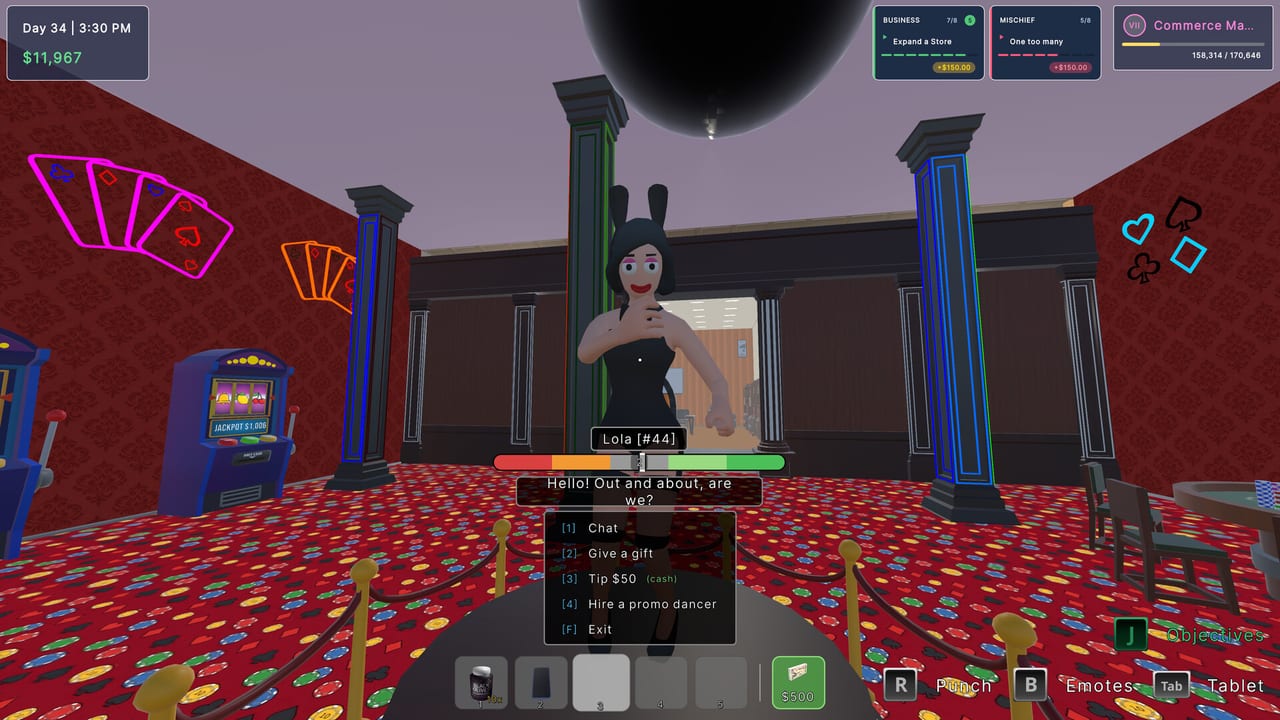
The Comeback Update dropped a casino into the mall. One machine is live: a physical slot cabinet where you pull, bet, and spin. This page covers how it works, what the house edge means for your wallet, and whether the casino belongs in your run at all.
If you came here looking for a get-rich-quick guide, save yourself the read: the house edge is real, the odds are not in your favour, and no betting system reliably beats a slot machine over time. That said, the casino is a real game feature with documented mechanics, and understanding them is the difference between playing it and being played by it.
What the casino adds
The mall now has a dedicated casino space. The first and currently only active machine is the slot cabinet. Future machines have been hinted at in patch notes but are not in the current build. The space itself is a new area of the mall layout — a zone distinct from the main concourse, the for-sale storefronts, and the back corridors.
The slot machine is a physical object inside the casino space. You walk to it, interact with it, and place bets with in-game currency. It is not a store and does not produce income through selling products. Playing it is a consumption activity, not a business activity.
How the slot machine works
Walk up to the cabinet and interact with it. The interface lets you:
- Choose a bet amount before each spin
- Spin the reels and watch the outcome
- Collect winnings automatically credited to your in-game cash if the spin lands a payout
- Walk away at any time — there is no forced continuation
The machine has standard slot reel visuals. Win conditions and payout multipliers follow a defined paytable visible on the cabinet face before you bet.
The house edge
The official patch notes for the Comeback Update include one direct sentence about the slots: “House edge is real, so play smart.” This is not marketing copy. Slot machines in real-world casinos are designed to return less than the amount wagered over time, and the same principle applies in-game.
The house edge means that for every dollar you bet, the machine statistically retains a percentage over a large number of spins. A single session can go any direction. Over many sessions, the expected return is below 100%.
Practical takeaway: the casino is a place to spend money you have already accepted as spent, not a revenue stream. If you go in with a fixed budget — a “fun tax” — and stop when it is gone, you are playing it correctly. If you are going in to fund your next inventory purchase, the odds will not cooperate.
When to play and when to skip it
The casino is entirely optional. It does not unlock anything, does not advance any perk lines, and does not affect store attractiveness or customer behaviour. The only thing it affects is your cash balance.
Reasons to play:
- You have cash that does not affect your store operations
- The casino space is part of the mall exploration loop
- You enjoy the risk-reward interaction as a game activity
Reasons to skip it:
- You are managing a tight inventory budget in a competitive lobby
- You are in a Mall Buyout race where every dollar counts
- You do not enjoy negative expected-value entertainment
Casino and the living economy
The Comeback Update added a dynamic events system alongside the casino. Random events can trigger wholesale opportunities and supply shortages that shift the economy mid-round. The casino does not interact with these events — it is a standalone consumption activity. A trending product event does not make the slot machine pay out more, and a supply shortage does not change your odds.
If you are managing the living economy, the casino is a separate ledger item: cash in, entertainment out, nothing else.
What comes next
The casino space exists as a dedicated area but is currently limited to one machine. Patch notes reference the space having “opened its doors” and “the first machine is live,” which strongly suggests future machines — possibly table games or additional slot variants — are planned. The mall exterior is also still under construction, and the full outside world will arrive in later updates.
Check the updates hub for the latest patch notes and the updates page for the full Comeback Update changelog.
Frequently asked
Q: Is the casino worth playing for money? A: No. The house edge means the expected return is below 100% over time. It is entertainment spending, not investing.
Q: Does the casino affect my store or reputation? A: No. It is a standalone consumption activity. It does not unlock perks, affect customer behaviour, or interact with the store system.
Q: Are more casino machines planned? A: Patch notes describe this as “the first machine is live,” suggesting future additions. Check the updates hub for the latest.
Q: Can I lose my whole store budget at the casino? A: Yes, if you bet aggressively. Play with money you have already decided is spent, not money you need for inventory or wages.
Q: Does the dynamic events system affect casino odds? A: No. The casino operates independently from the economic events system added in the same update.
Frequently Asked Questions
Quick answers players actually search for in Mall Rivals.
What is the mall casino in Mall Rivals?
A dedicated casino space added in the Comeback Update featuring a physical slot machine cabinet you can bet on and spin.
Is the slot machine worth playing?
The house edge is real. It is entertainment, not a revenue strategy. Only play with money you can afford to lose.
Can the casino affect my store or reputation?
No. It is a standalone activity with no effect on stores, perks, or customer behaviour.
Are more casino machines coming?
Patch notes describe this as the first machine live. Future additions are likely planned but not yet released.
Does the dynamic events system interact with the casino?
No. The casino operates independently from the economic event system.